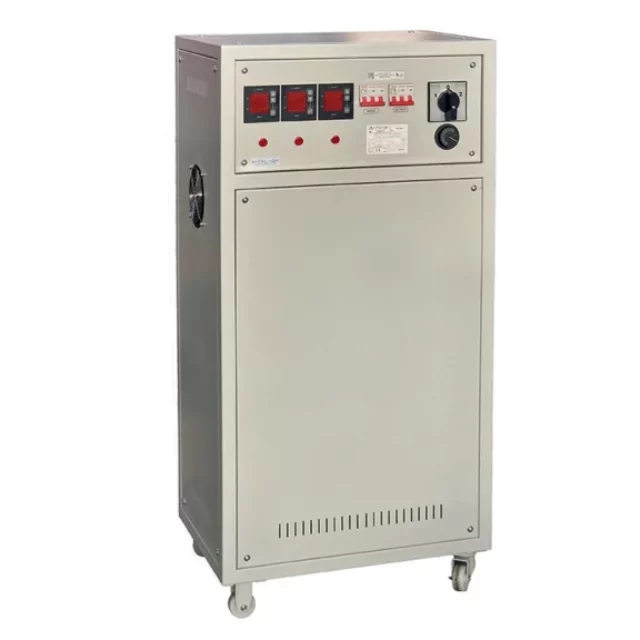
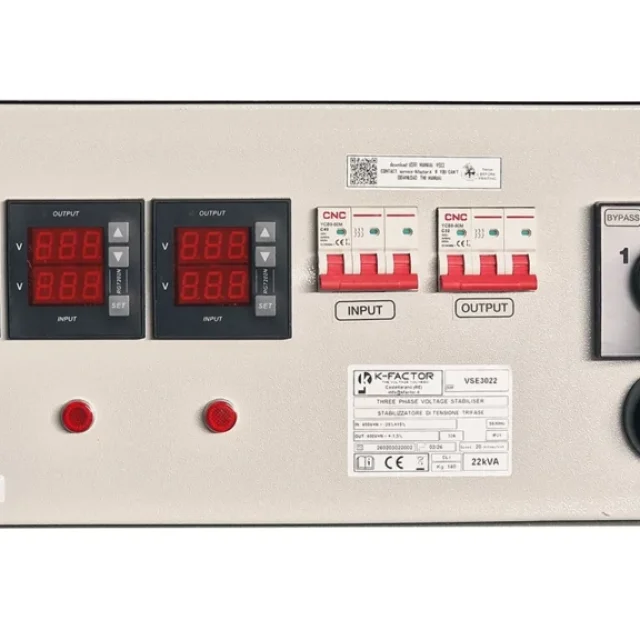
VOLTAGE STABILIZERS
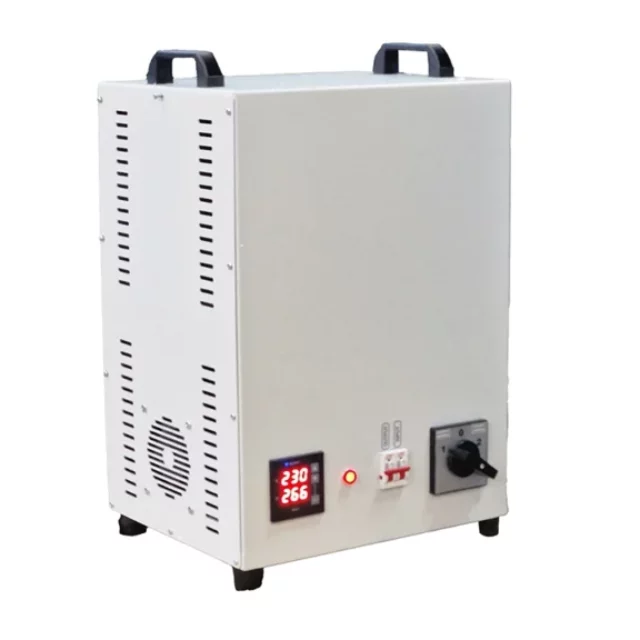
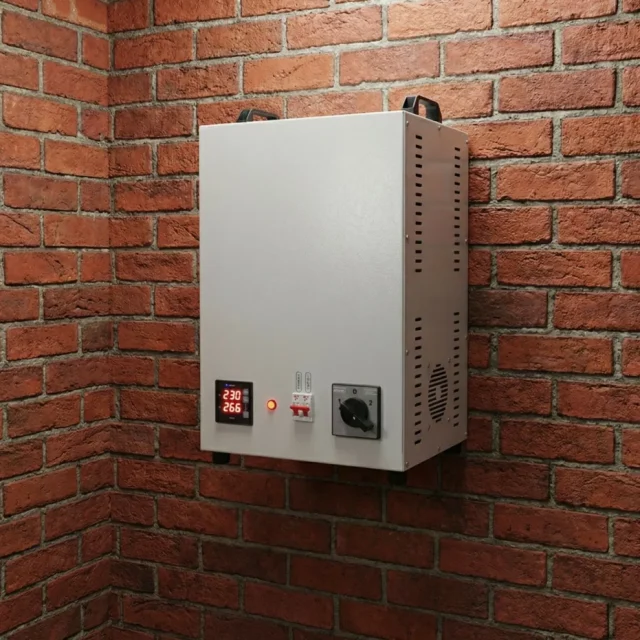
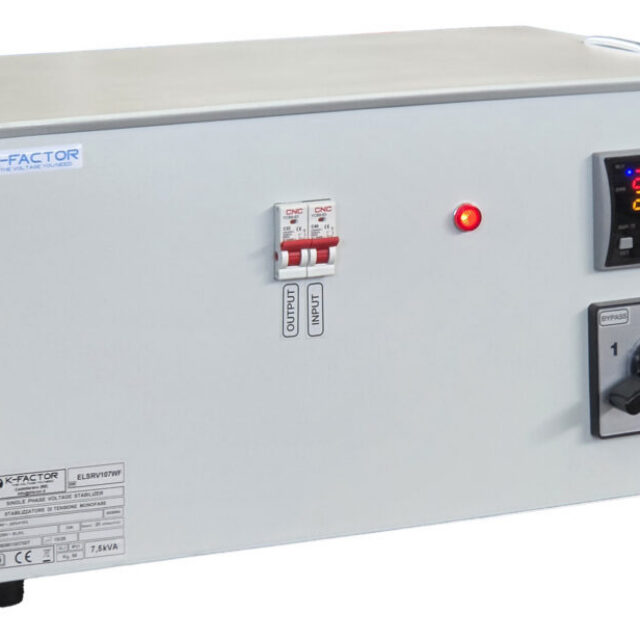
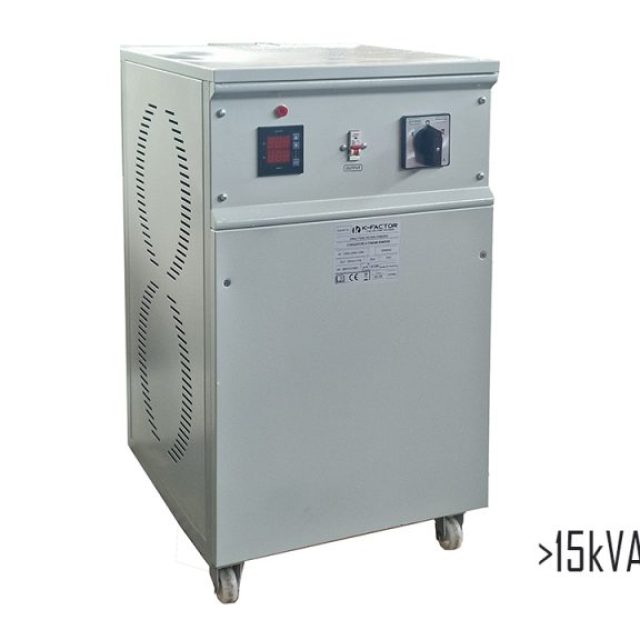
K-factor voltage stabilizers are born out of an accurate and in-depth understanding of the power grid and the problems that arise in the real-world, manufacturing, and domestic environment, where numerous factors contribute to poor and erratic power grid quality.
Voltage stabilizers intervene, today in an increasingly effective and sophisticated way, where continuous voltage variations greatly reduce the efficiency of systems, cause very serious damage or severe malfunction.
Our voltage regulators work automatically to adjust the voltage without any user intervention.
Once the regulator is turned on, the line voltage is continuously measured and the necessary raising/lowering operations are performed automatically, providing the system with the constant voltage required for proper operation.
We have passionately developed two different voltage regulation technologies, electronic voltage stabilizers, which are fully static, and electromechanical voltage stabilizers, whose functionality is based on a servo regulator.
WHAT IS A STATIC (ELECTRONIC) VOLTAGE STABILIZER?
Static voltage stabilizers are devices used for voltage control and utility protection by means of a microprocessor board that operates a semiconductor system with high-speed technology.
They adjust the voltage value to the correct one required by rapidly growing and increasingly sensitive industrial devices, and are designed to meet their continuous need for safe and correct power; they can be manufactured with different and very wide input voltage ranges for places where mains voltages drop and rise excessively, assesses and adjusts the mains voltage in 0.020 seconds for mains voltage drops as low as -60% or rise as high as 40%, and corrects at a rate of 500V/sec.
WHAT IS AN ELECTROMECHANICAL VOLTAGE STABILIZER?
Servo regulators consist of a variable speed drive, a servo motor that controls the variable speed drive, a multimeter with electronic management that controls the motor, and the booster transformer.
The high torque of the motor corrects quickly because of the DC servomotor and the control system that can respond quickly to changes in voltage.
When the adjustment has been completed, the servomotor is de-energized with an electronic braking circuit.
Electrical disturbances and transients do not disturb the regulation